
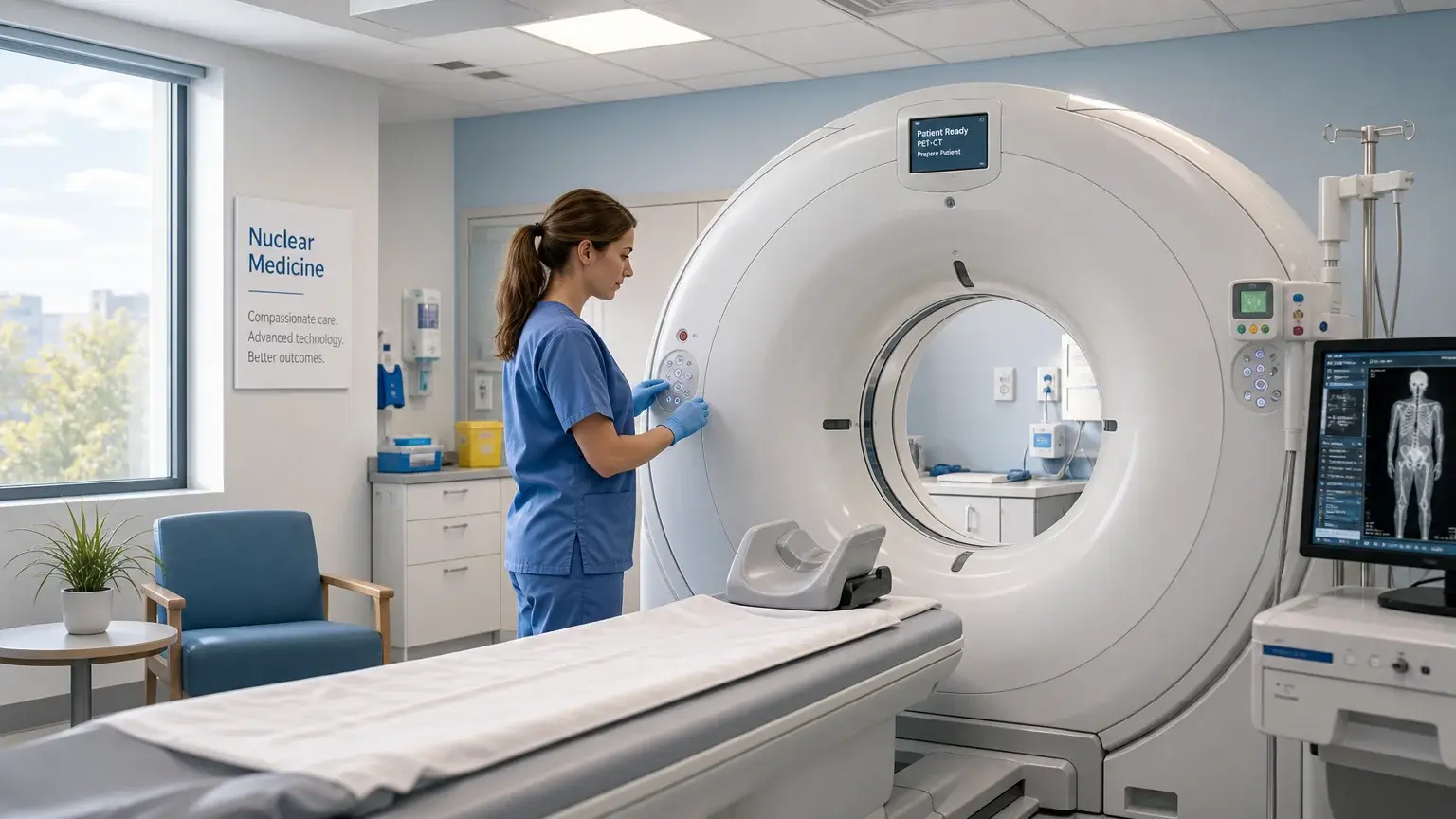
What Is a PET Scan? Purpose, Process and UK Access Guide

Summary: A PET scan is an imaging test that uses a small amount of radioactive tracer to reveal how cells and tissues are working, helping doctors detect cancer, heart disease and brain disorders early. The procedure is painless, takes roughly 30 to 60 minutes, and results usually arrive within one to two weeks in the UK.
How do specialists spot disease before it becomes visible on a standard image? Increasingly, the answer is a scan that photographs biological activity rather than anatomy alone. A positron emission tomography scan highlights cells that are behaving abnormally, giving clinicians a molecular view of the body that other tests cannot provide. For many patients, understanding this test also means understanding how to reach it quickly, which is why some explore our guide to choosing a private health insurance plan for diagnostic scans.
Access matters because demand is high. As of January 2026, according to the Nuffield Trust, around 1.8 million people in England were waiting for a diagnostic test, with roughly 2.5 million tests carried out that month. Knowing what the scan involves, how to prepare, and which route to take can shorten the distance between a referral and an answer.
What a PET scan reveals about your body
Unlike an X-ray or an ultrasound, a pet scan does not simply picture structures. It measures function. The test uses a mildly radioactive substance, called a tracer, that concentrates in cells with unusually high activity, producing bright areas often described as "hot spots" on the images.
The tracer is typically a radioactive form of sugar known as FDG. Because active, fast-growing cells consume more energy, they absorb more of this radioactive tracer and stand out clearly. This is why the technique can identify disease processes such as inflammation, infection or malignancy at an early stage, sometimes before physical changes appear elsewhere.
To sharpen the picture, the test is frequently combined with other imaging. A PET-CT scan merges functional data with the detailed anatomy of a computed tomography scan, while a PET-MRI scan pairs it with magnetic resonance imaging. These hybrid scans give doctors both the "what" and the "where" in a single appointment.
Why doctors refer you for the test
Consider a patient whose earlier ultrasound or CT scan showed an abnormal area that could not be fully explained. This is a common trigger for referral. The scan helps clarify whether a lump is cancerous, and if so, how large it is and whether it has spread.
The applications extend well beyond oncology. Clinicians use this nuclear medicine imaging to investigate cancer staging, coronary artery disease, the aftermath of a heart attack or stroke, and brain disorders including epilepsy, dementia and Alzheimer's disease. It can also show whether cancer treatment is working or whether tissue remaining after therapy is scar tissue rather than active disease.
PET scanners are specialised and tend to be concentrated in major cancer centres, so you may need to travel to a dedicated unit. Across the UK, diagnostic imaging sits within a heavily used system: the GOV.UK statistics report monthly waiting times and activity for fifteen key diagnostic tests, reflecting the scale of national demand.
How to prepare for your appointment
Preparation is straightforward but important, because eating and activity can affect where the tracer travels. Your appointment letter will give precise instructions, and hospitals may vary slightly, so follow the guidance you receive.
In most cases you should expect to:
Stop eating for around four to six hours beforehand, drinking only plain water.
Avoid strenuous exercise for up to 24 hours before the scan.
Remove jewellery, hair clips, wired bras and any clothing containing metal, as metal interferes with the images.
Tell the department if you are pregnant, think you might be pregnant, or are breastfeeding.
If you have diabetes, not eating may be a problem, so call the department in advance to adjust your diet or medication. If enclosed spaces make you anxious, mention this too; the scanner is open at both ends, and medicine to help you relax can be arranged if needed. Weighing these practicalities against cost and speed is often easier after reading about understanding a private health insurance policy for diagnostics.
What happens during and after the scan
A radiographer performs the scan in a specialist hospital department. About an hour before imaging, you receive an injection of the tracer through a small tube in your arm or hand, then rest quietly so the substance can spread through your tissues.
When it is time, you lie on a narrow bed that slides slowly through the ring-shaped scanner. The radiographer operates the machine from an adjacent room but can see and speak to you throughout. The imaging itself usually takes 30 to 60 minutes, and although the process is painless, you must stay still so the pictures remain sharp.
Afterwards, you can normally go home, eat and drink as usual. The radiation is low and leaves your body within a few hours, and drinking plenty of fluid helps flush the tracer out. As a precaution, you will be advised to avoid close contact with pregnant people, babies and young children for the rest of the day. If you travel through an airport within a week, carry your appointment letter, since sensitive scanners may detect trace radiation.
Understanding your results and the risks involved
Results are not immediate. In the UK, a radiologist with specialist training reviews the images, writes a report and sends it to the doctor who referred you, a process that usually takes one to two weeks. If you have not heard anything after a couple of weeks, contact the referring doctor.
A report is typically described as normal, meaning no signs of disease, or abnormal, suggesting infection, inflammation or cancer that may require further tests. Your doctor will explain what the findings mean for you and outline the next steps.
The test is safe for most people, and serious problems are rare. The tracer contains only a small dose of radiation, though any radiation slightly raises long-term cancer risk, and a PET-CT scan adds a further small dose. Allergic reactions to the tracer are very rare; tell the radiographer immediately if you feel weak, sweaty or breathless. Pregnancy is a particular concern, so scans are performed during pregnancy only in emergencies.
Accessing a PET scan in the UK: NHS and private routes
Here the practical question becomes urgent: how soon can you be seen? On the NHS, the scan is free at the point of use, but you need a referral and join a waiting list. The NHS England data shows that the six-week diagnostic standard has been under sustained pressure, with waits varying widely by region and test type.
Private routes offer faster access, generally within days, but require payment out of pocket or a claim through private medical insurance. The choice often comes down to urgency, cost and whether your policy covers advanced imaging. Reviewing our comparison of PET scan coverage: NHS vs private can help you weigh these routes before you commit.
Route | Typical speed | Cost to patient | Referral needed |
NHS | Weeks to months, subject to waiting lists | Free at point of use | Yes, GP or specialist |
Private self-pay | Usually a few days | Paid out of pocket | Often self-referral available |
Private with insurance (via our whole-of-market broker consultations) | Usually a few days | Covered subject to policy terms, with our claims advocacy support | Referral arranged with broker guidance |
Insurance is not always simple, especially for patients previously declined for existing health issues. If that applies to you, our guidance on PET scans and pre-existing conditions explains how tailored underwriting can preserve protection for the areas that matter most.
Making an informed choice about your scan
A PET scan is a powerful, generally safe tool that shows how your body is functioning rather than simply how it looks, which is why it plays such a central role in diagnosing and monitoring cancer, heart and brain conditions. Preparation is modest, the procedure is painless, and the main decisions you face are less about the test itself and more about timing and access. Understand your referral, ask your radiographer any questions, and consider whether the NHS route or a faster private pathway best fits your circumstances and your appetite for waiting.
Take action with AI Health Network UK
When answers cannot wait, the route to your scan matters as much as the scan itself. If NHS waiting times feel too long, or if a previous health issue has made cover difficult to secure, the right insurance arrangement can turn months of uncertainty into a matter of days.
We combine an AI-powered symptom summary with certified, FCA-authorised broker consultations across UK insurers, and we provide free claims advocacy if a claim is ever disputed. To explore how our private health medical insurance for diagnostic scans could speed up your access to imaging, our specialists handle the comparisons and the paperwork on your behalf, at no cost to you for the advisory service.
Frequently Asked Questions
How long does a PET scan take from start to finish?
The imaging itself usually lasts between 30 and 60 minutes. However, you should allow around two hours in total, because you arrive about an hour beforehand for the tracer injection and a resting period while it spreads through your body.
Is the radiation from a PET scan dangerous?
The tracer contains only a very small dose of radiation, which leaves your body within a few hours and is considered safe for most people. Any radiation slightly increases long-term cancer risk, so your doctor ensures the benefits of the scan outweigh this small risk.
Can I eat before my appointment?
In most cases you must stop eating for around four to six hours beforehand and drink only plain water. If you have diabetes or find fasting difficult, call the department in advance so they can adjust your instructions safely.
How quickly can I get a PET scan privately in the UK?
Private providers can often arrange imaging within a few days, compared with the longer NHS waits many patients experience. Through our whole-of-market broker consultations, we can help you identify a policy that covers advanced imaging so cost is not a barrier to speed.
When will I receive my results?
A specialist radiologist reviews the images and reports to your referring doctor, which usually takes one to two weeks in the UK. If you have not heard anything after a couple of weeks, contact the doctor who arranged the scan.


Comments