

Best Group Healthcare Providers in the UK for 2026

Summary: The best group healthcare providers in the UK for 2026 include Bupa, AXA Health, WPA, Aviva and Vitality, with Freedom Health Insurance, Benenden Health, The Exeter, National Friendly and Allianz also serving specific employer needs. Bupa suits broad cover, AXA offers flexibility, WPA prioritises service, and Vitality stands out for employee wellbeing rewards.
For many employers, the best group healthcare providers in the UK for 2026 are Bupa, AXA Health, WPA, Aviva and Vitality. The right choice depends on workforce size, budget, hospital access, underwriting requirements and the benefits employees will actually use. For broader market context, our guide to the top private healthcare providers in the UK also explains how insurers differ from private hospital groups and healthcare membership organisations.
Group healthcare can support recruitment, retention and faster access to diagnosis or treatment. However, policies differ considerably in outpatient limits, mental health cover, cancer pathways, excesses, hospital lists and treatment exclusions. Employers should compare policy documents rather than relying only on brand familiarity or an introductory premium.
Best group healthcare providers UK 2026: quick shortlist
Rank | Provider | Best for | Key differentiator |
|---|---|---|---|
1 | Bupa | Broad small business cover | Wide facility access and extensive employee health services |
2 | AXA Health | Flexible plan design | Modular cover for diagnosis, treatment, cancer and mental health |
3 | WPA | Personal service and choice | Not-for-profit structure and flexible business healthcare options |
4 | Aviva | Value and simple administration | Competitive SME cover with digital GP and cancer support |
5 | Vitality | Wellbeing-led businesses | Rewards and activity-based employee engagement |
6 | Freedom Health Insurance | Flexible SME and corporate cover | Modular plans and postcode-blind pricing |
7 | Benenden Health | Affordable everyday healthcare | Not-for-profit membership with accessible health services |
8 | The Exeter | Mutual-led and tailored cover | Flexible underwriting and member-focused positioning |
9 | National Friendly | Premium stability | Mutual structure and distinctive guaranteed pricing options |
10 | Allianz | International workforces | Global employee health plans and multilingual support |
What should employers compare before choosing a provider?
A group policy can look generous until employees need diagnostics, specialist consultations or ongoing mental health support. Start by defining the workforce profile, including employee locations, age distribution, family cover, common health priorities and the level of absence the business can reasonably absorb.
Compare inpatient, day-patient and outpatient benefits separately. Check whether MRI, CT and PET scans are included, whether physiotherapy requires a referral, and whether employees can select their own consultants. Cancer treatment, mental health support and digital GP services should also be reviewed against the policy limits.
Underwriting deserves particular attention. Moratorium underwriting may exclude recent medical history, while full medical underwriting assesses disclosed conditions before cover begins. Medical history disregarded arrangements may be available for certain employer schemes, although acceptance and pricing depend on insurer criteria. Our overview of private medical insurance offers provides further context on how cover structures can differ.
Cost is shaped by employee ages, location, claims history, selected benefits, hospital access, excesses and underwriting. You should also consider whether the provider offers employee-paid excesses, shared responsibility or restricted hospital options. Our guide on how to choose your private health insurance plan explains why the lowest initial premium may not provide the best long-term value.
Employers should check the regulatory status of any intermediary arranging or advising on insurance. The Financial Conduct Authority explains that authorised firms appear on the Financial Services Register and should have permission for the activities they provide.
Tax treatment should also be considered before implementation. HM Revenue and Customs states that employer-paid premiums under a group insurance policy can create a taxable benefit for employees, including directors.
1. Bupa

Best for: Employers seeking broad cover, strong mental health support and a recognised healthcare network.
Bupa is a strong all-round choice for small and medium-sized employers that want a structured group policy with several cover levels. Its small business offering is designed for teams from 2 to 249 people, with options covering inpatient, day-patient, outpatient, cancer and mental health services.
Its business plans can include digital GP access, face-to-face GP appointments, dental checks, prevention pathways and employee wellbeing services. Employers can also choose different facility access levels, outpatient allowances, excesses and underwriting methods. This makes Bupa suitable where a company wants a broad package with relatively clear configuration options.
The main trade-off is that comprehensive cover may cost more than a narrower modular plan. Employers should also check the approved hospital list, consultant arrangements and limits for outpatient therapies before selecting the highest tier.
Pros:
Strong breadth of medical, cancer and mental health benefits.
Suitable for businesses with 2 to 249 employees.
Wide facility access options and digital healthcare services.
Additional wellbeing and prevention features can support employee engagement.
Cons:
Broad cover may create a higher premium than leaner alternatives.
Facility access and outpatient allowances vary by selected level.
2. AXA Health
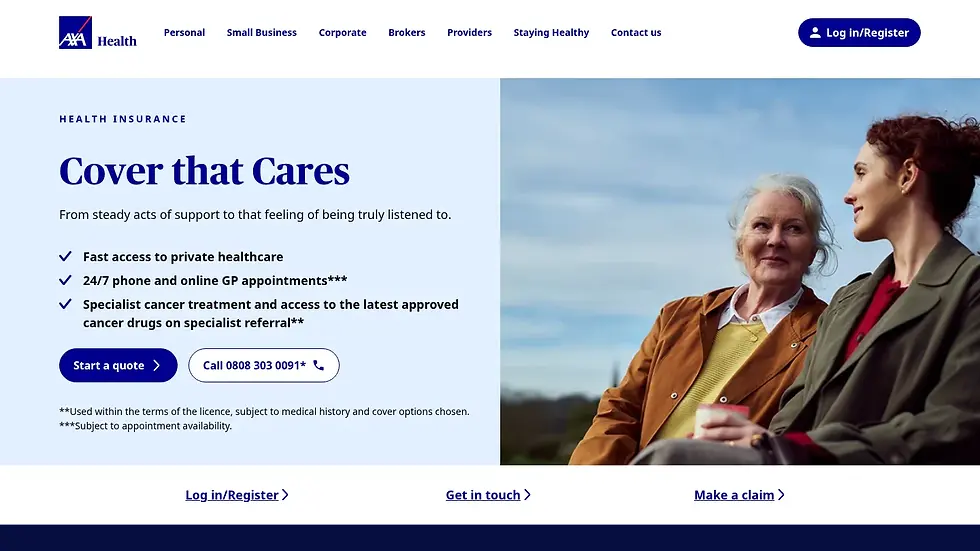
Best for: Employers that want to build cover around their budget and workforce priorities.
AXA Health is particularly suitable for organisations that prefer modular plan design. Employers can select combinations of inpatient and day-patient care, outpatient diagnosis, cancer care and mental health support. This can help a business avoid paying for benefits that employees are unlikely to use.
AXA Health also promotes digital GP access, specialist cancer support, physiotherapy pathways and tools for muscle, bone and joint conditions. Its business plans are available for smaller companies and larger corporate groups, with family additions available in some arrangements.
The flexibility is useful, but it can make comparison more complicated. A plan that appears inexpensive may have narrower outpatient benefits, restricted access or additional conditions attached to specific services. Employers should compare the final configuration rather than the headline product name.
Pros:
Highly configurable cover for different business budgets.
Strong digital GP and specialist support options.
Separate care options can help target priority benefits.
Suitable for small businesses and larger corporate groups.
Cons:
Modular choices require more administration and careful comparison.
Broader cover can become expensive when several options are added.
3. WPA

Best for: Employers that prioritise service, flexibility and employee choice.
WPA is a not-for-profit UK health insurer with business healthcare solutions for organisations of different sizes. Its positioning centres on personal service, flexible cover and freedom to choose where, when and who provides treatment.
Business schemes can include inpatient, day-patient and outpatient care, mental health support, remote GP services, employee assistance features and wellbeing resources. Employers may also consider excesses or shared responsibility arrangements to manage the premium.
WPA can work well for employers that do not want a heavily standardised package. The limitation is that highly flexible policies can be harder to compare directly with larger insurers. You should examine the benefit schedule, limits, underwriting basis and provider network in detail.
Pros:
Not-for-profit structure with a strong service-led proposition.
Flexible healthcare solutions for small and larger businesses.
Options for mental health, remote GP and employee assistance support.
Shared responsibility arrangements may help manage premiums.
Cons:
Flexible configurations can make like-for-like comparisons difficult.
Some comprehensive options may not be the cheapest for every workforce.
4. Aviva
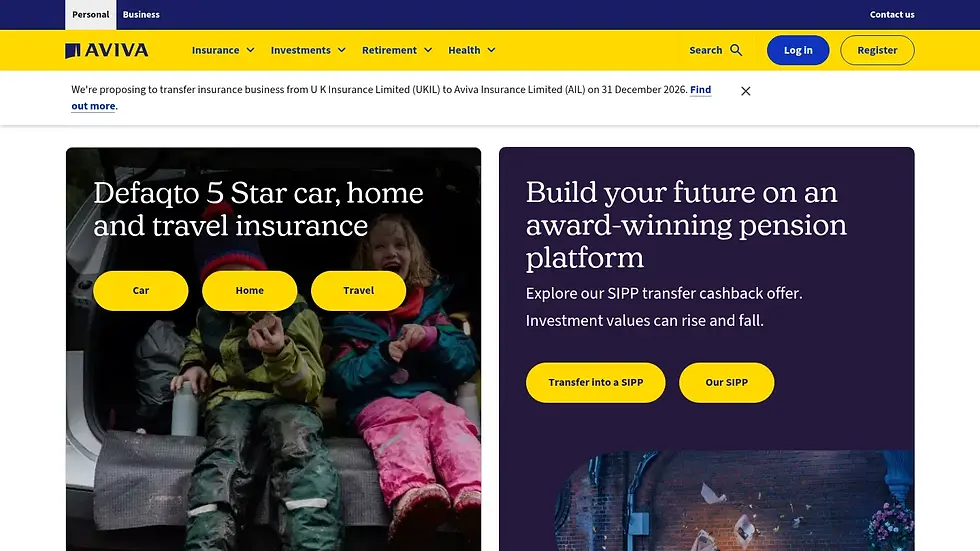
Best for: Small and medium-sized employers seeking practical cover and competitive value.
Aviva is a sensible starting point for employers that want a straightforward group healthcare arrangement. Its business plans are designed to provide core treatment and cancer cover, with outpatient benefits and additional services available according to the selected scheme.
Key features associated with Aviva business cover include digital GP access, mental health pathways, cancer support and services for musculoskeletal conditions. Its Expert Select approach can help employees identify suitable hospitals and specialists when treatment is authorised.
Aviva may suit first-time buyers that want to keep administration manageable. However, employers should check whether the selected hospital list, outpatient allowance and specialist access match the geographical distribution of the workforce. A simpler plan may also provide fewer wellbeing extras than a rewards-led alternative.
Pros:
Clear positioning for small and medium-sized businesses.
Useful combination of core medical, cancer and mental health support.
Digital GP services can improve access for distributed teams.
Suitable for employers focused on practical value.
Cons:
Some configurations may offer fewer lifestyle benefits than Vitality.
Hospital list and outpatient choices can materially change value.
5. Vitality
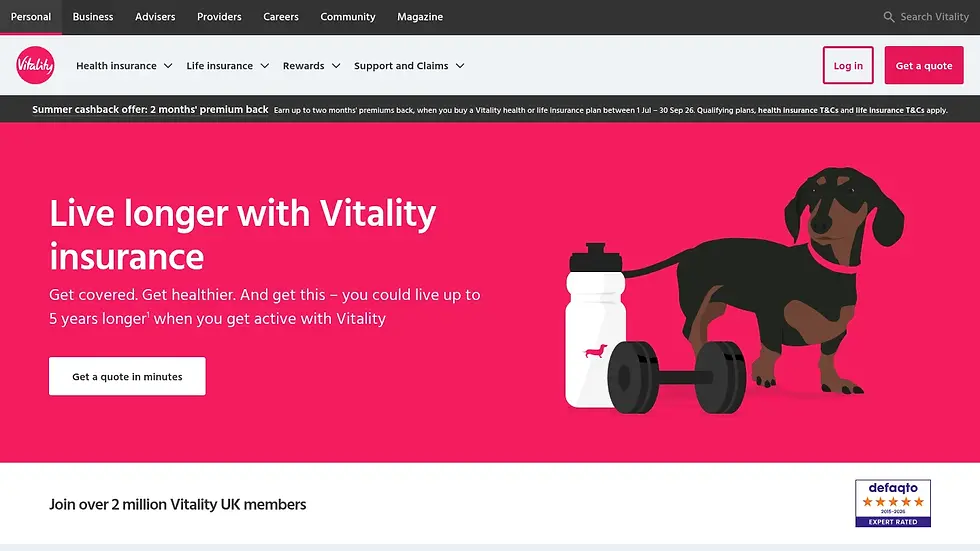
Best for: Employers with active, digitally engaged teams that will use wellbeing rewards.
Vitality combines group health insurance with a structured rewards and prevention programme. Employees can receive incentives linked to healthy activity, fitness participation and selected partner services. This gives employers a way to connect medical cover with wider workforce wellbeing.
Business cover can include inpatient and day-patient treatment, cancer care, mental health support, virtual GP access and employee assistance services. The model is particularly attractive where employees are likely to engage with an app, activity tracking or health-related rewards.
The central limitation is behavioural. A rewards programme creates less value if employees do not use it. Employers should also compare the underlying medical cover, outpatient limits, claims structure and renewal approach against providers offering more comprehensive traditional cover.
Pros:
Distinctive rewards programme can increase employee engagement.
Strong focus on prevention, activity and digital health.
Suitable for small and medium-sized businesses.
Can complement a wider wellbeing strategy.
Cons:
Value depends on sustained employee participation.
Some teams may prefer richer core cover over lifestyle incentives.
6. Freedom Health Insurance

Best for: Employers seeking specialist SME cover with flexible options and consistent location pricing.
Freedom Health Insurance offers business, SME and corporate healthcare plans. Its product range includes modular options, private hospital treatment, cancer cover, outpatient benefits and additional services that can be selected according to workforce needs.
A distinctive feature is postcode-blind pricing, meaning location does not automatically create the same regional pricing differences found elsewhere. This may be relevant to employers with staff in expensive healthcare areas, although the final premium still depends on the workforce and selected cover.
Freedom can also suit employers that want a specialist provider rather than a large general insurer. The trade-off is that employers should compare the precise benefit limits, underwriting approach, network access and renewal terms carefully.
Pros:
Flexible SME and corporate policy options.
Postcode-blind pricing may help employers with staff in higher-cost regions.
Strong core options for hospital and cancer treatment.
Additional benefits can be added to create a more tailored scheme.
Cons:
Product configurations require detailed comparison.
Smaller brand recognition may matter to employees who prefer household names.
7. Benenden Health
Best for: Employers seeking affordable everyday healthcare and a not-for-profit membership model.
Benenden Health is a not-for-profit healthcare provider rather than a conventional PMI insurer in the same format as every provider on this list. It offers accessible services such as GP support, diagnostics, approved treatments, physiotherapy and mental health assistance.
Its membership model can suit smaller employers that want to offer practical healthcare access without immediately choosing a comprehensive private medical insurance scheme. Benenden also states that it accepts pre-existing conditions and does not use medical questionnaires for membership access.
Employers should understand the distinction between membership healthcare and full private medical insurance. The range of covered treatments, eligibility rules, waiting periods and service limits may differ from a comprehensive insurer. Benenden is therefore best considered where affordability and everyday access are more important than maximum hospital choice.
Pros:
Not-for-profit approach with an accessible price proposition.
Useful everyday healthcare services for employees.
Pre-existing conditions are accepted under its membership model.
May suit smaller employers with limited benefits budgets.
Cons:
It is not a direct substitute for every comprehensive PMI policy.
Employers should check treatment scope and service limits carefully.
8. The Exeter

Best for: Employers interested in mutual ownership and tailored health insurance arrangements.
The Exeter is a mutual insurer known for its member-focused approach and health insurance products. It can be relevant to employers that value a provider without conventional external shareholders and want to explore different underwriting or policy structures.
Its wider market positioning includes flexible health insurance, cancer support and options designed around individual circumstances. For group buyers, the practical suitability will depend on the size of the scheme, eligibility rules, available corporate products and the terms offered after underwriting.
The Exeter may be less familiar to employees than Bupa or Aviva. That does not determine policy quality, but employers should communicate the provider’s claims process, hospital access and support services clearly during implementation.
Pros:
Mutual ownership may appeal to employers seeking member-focused values.
Potentially useful where underwriting terms require careful discussion.
Suitable for employers willing to assess cover beyond the largest brands.
Cons:
Corporate suitability depends heavily on the scheme and eligibility criteria.
Employees may be less familiar with the brand.
9. National Friendly

Best for: Employers and trustees that place particular importance on premium predictability.
National Friendly is a mutual provider with a long-established protection and health insurance background. Its distinctive market proposition includes pricing stability features associated with its private medical insurance products, which may be relevant when employers are concerned about unexpected renewal changes.
Premium predictability can make budget planning easier, particularly for smaller organisations with limited benefits reserves. However, employers should assess whether the available group product provides the required hospital access, outpatient scope, mental health support and employee services.
National Friendly is best considered as a specialist option rather than an automatic choice for every workforce. Employers should request detailed group terms and compare the guaranteed pricing conditions, claims treatment and renewal basis with larger competitors.
Pros:
Mutual structure may appeal to employers seeking member-focused governance.
Pricing stability is a distinctive consideration for budget planning.
Potentially relevant for employers concerned about renewal volatility.
Cons:
Group product suitability must be confirmed for the employer’s workforce.
It may offer less brand familiarity than larger providers.
10. Allianz
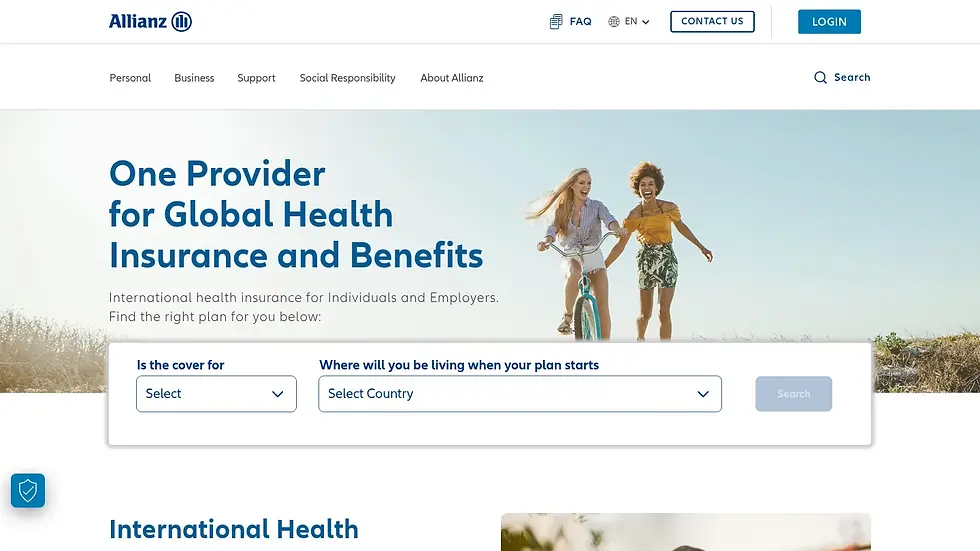
Best for: Multinational companies, internationally mobile employees and cross-border workforces.
Allianz Care is primarily relevant where employee healthcare needs extend beyond a standard UK group policy. Its international health plans can support employees located across different regions, with global provider access, multilingual assistance and international administration.
This makes Allianz more suitable for multinational companies, expatriate employees and organisations that require continuity across countries. It may also provide useful wellness, telehealth and assistance services alongside medical cover.
For a UK-only SME with locally based staff, an international plan may add unnecessary complexity and cost. Employers should clarify territorial scope, local regulation, claims administration, evacuation benefits and the relationship between international cover and UK NHS access.
Pros:
Strong fit for internationally mobile workforces.
Global provider network and multilingual support.
Useful international employee assistance and wellbeing features.
Can consolidate healthcare arrangements across multiple regions.
Cons:
International cover may be excessive for a UK-only workforce.
Territorial rules and administration require careful review.
How can employers improve the value of group healthcare?
A well-designed policy should reflect how employees actually use healthcare. Employers may achieve better value by comparing outpatient limits, choosing a suitable hospital list, setting an affordable excess and adding mental health or physiotherapy benefits where workforce data supports the decision.
Communication also affects the return on investment. Employees should know how to access digital GP services, obtain authorisation, find approved specialists and understand exclusions. A strong policy can underperform if employees do not understand how to use it.
Employers should also review the scheme before renewal. Workforce size, employee locations, claims history and recruitment priorities can change within a year. Reviewing the main private medical insurance benefits can help decision-makers separate valuable cover from attractive but underused extras.
Choosing the right group healthcare provider in 2026
The best group healthcare providers in the UK for 2026 serve different employer priorities. Bupa is a strong broad-cover option, AXA Health is well suited to modular design, WPA focuses on service and choice, Aviva offers practical value, and Vitality adds a distinctive wellbeing model. Freedom Health Insurance, Benenden Health, The Exeter, National Friendly and Allianz become more relevant when specific pricing, membership, mutual or international requirements apply. Before choosing, compare policy wording, underwriting, hospital access, employee support, tax treatment and renewal terms. The most suitable scheme is the one your workforce can use confidently and your business can sustain beyond the first year.
Take action with AI Health Network UK
Choosing group healthcare can be difficult when your business needs to balance employee expectations, policy limits, medical history and budget. A specialist consultation can help you clarify the structure of cover before you approach a regulated provider.

We provide a free AI health assessment and access to whole-of-market intermediary consultations for UK residents, including small businesses exploring group healthcare. Our service can help organise health information, identify relevant questions and connect you with a regional or specialist adviser. The final insurance advice and product choice remain with the FCA-regulated provider. Learn more about private medical insurance.
Frequently Asked Questions
What is group healthcare insurance?
Group healthcare insurance is private medical cover arranged by an employer for eligible employees, and sometimes their partners or dependants. It can help provide faster access to selected consultations, diagnostics and treatment, subject to the policy terms.
Which provider is best for a small UK business?
Bupa, AXA Health, Aviva, Vitality and WPA are all relevant options for small businesses, but they suit different priorities. Compare the workforce size, budget, hospital access, outpatient benefits, wellbeing services and underwriting before choosing.
Are pre-existing conditions covered by group healthcare?
Pre-existing conditions are often restricted under standard underwriting, although some employer schemes may offer different arrangements. The exact position depends on the insurer, group size, underwriting method and terms confirmed at application.
What affects the cost of group healthcare?
Premiums are influenced by employee ages, location, claims history, workforce size, selected benefits, hospital access, excesses and underwriting. Additional cover for outpatient treatment, mental health, dental care or international access may increase the cost.
Should an employer use a broker?
A specialist broker can help compare providers, explain policy differences and manage implementation or renewal discussions. Employers should check the intermediary’s regulatory status and confirm that the advice or arrangement is within the firm’s permissions.


Comments